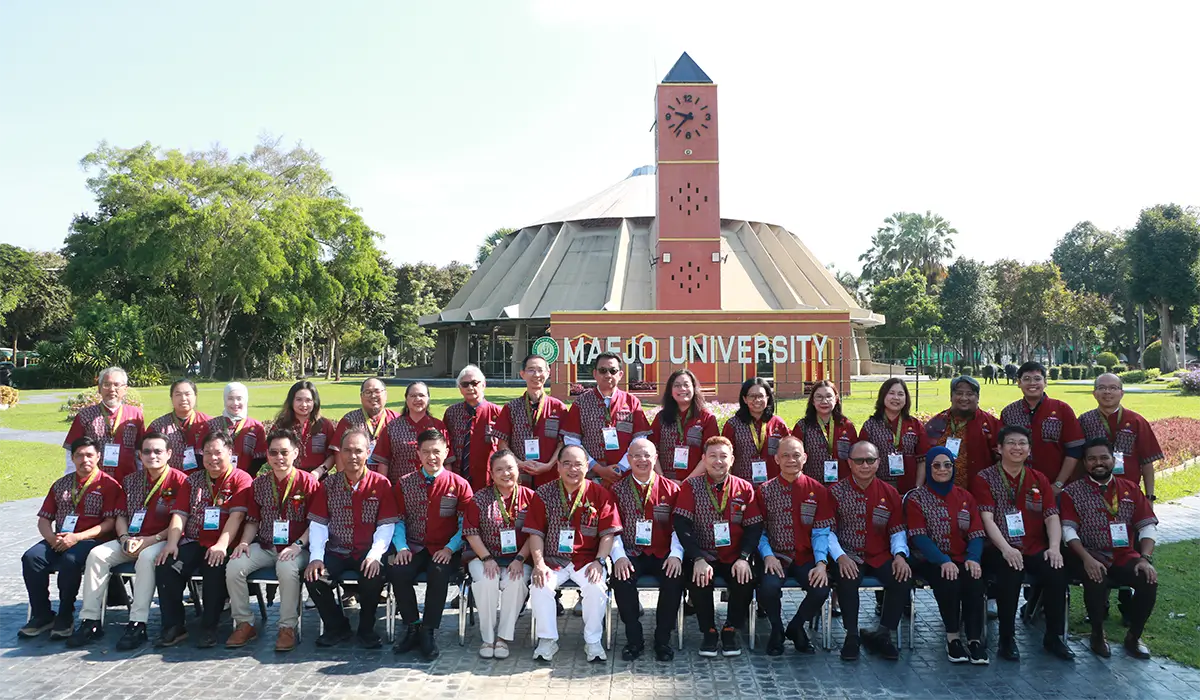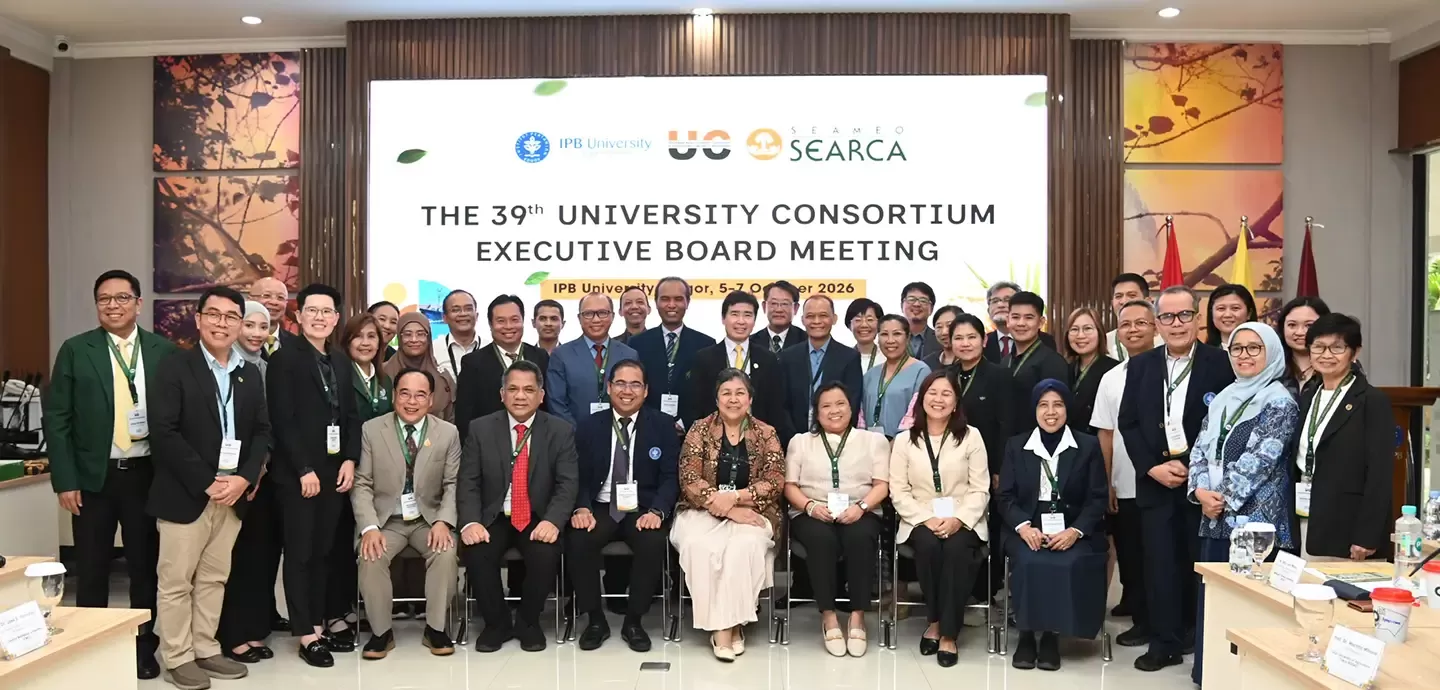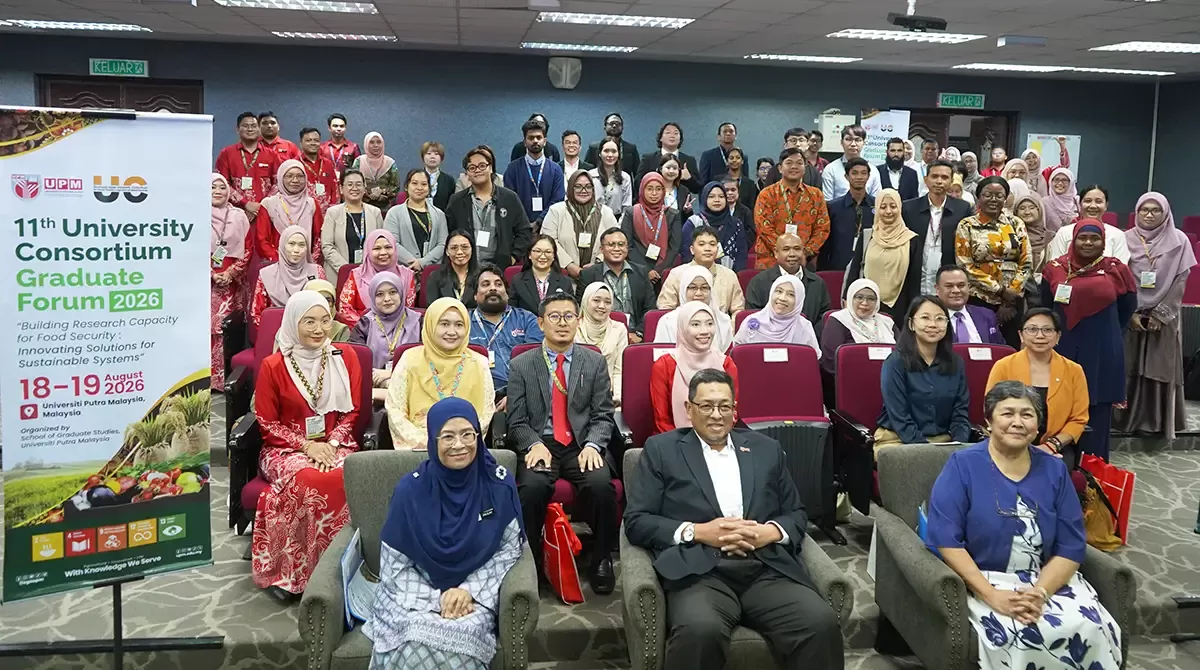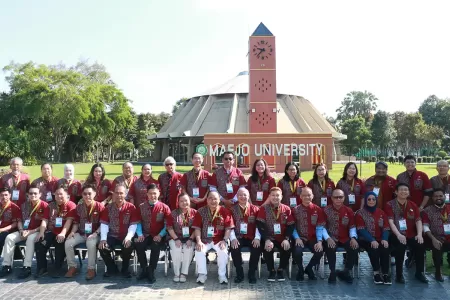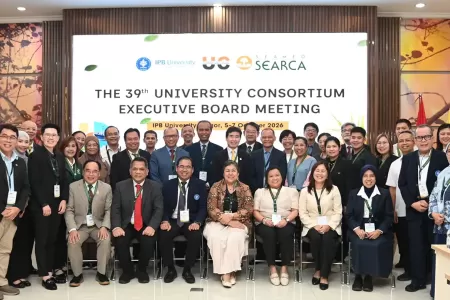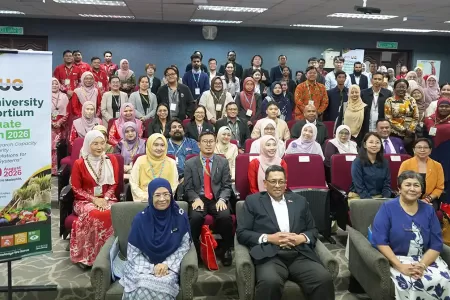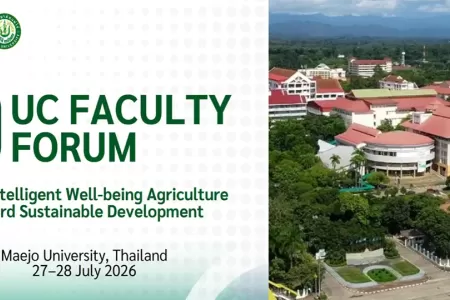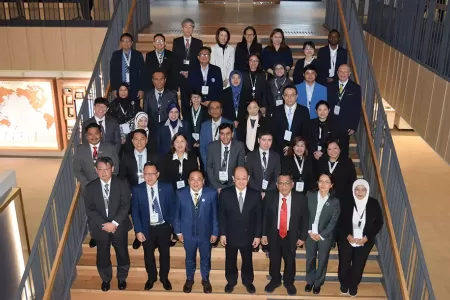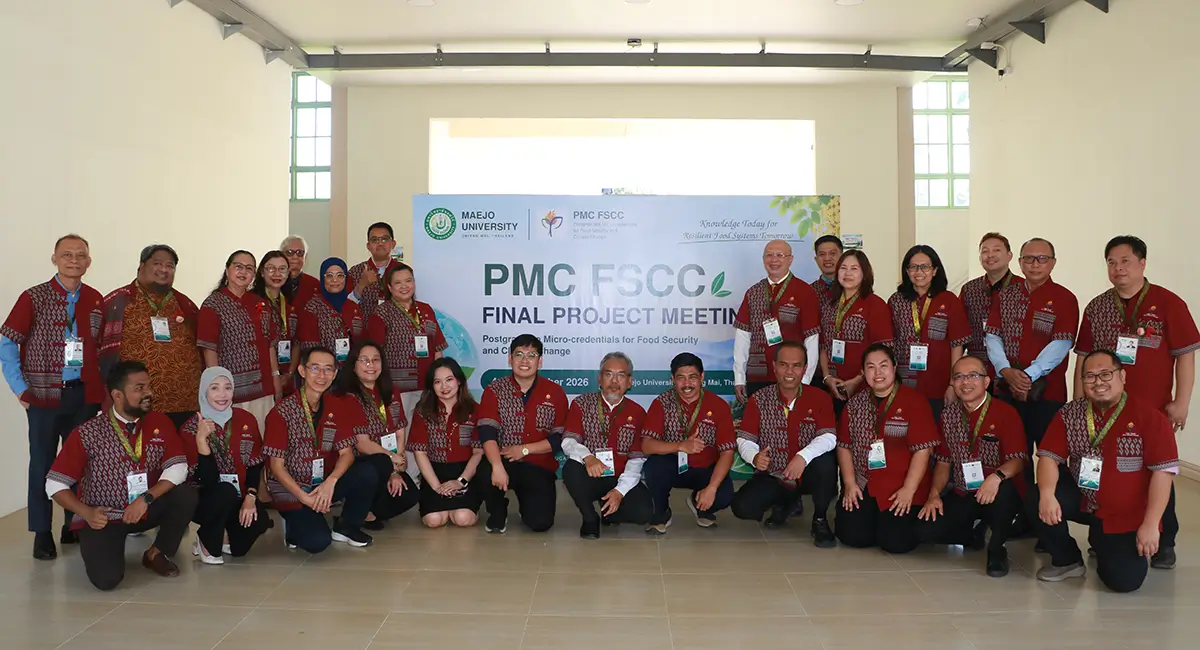
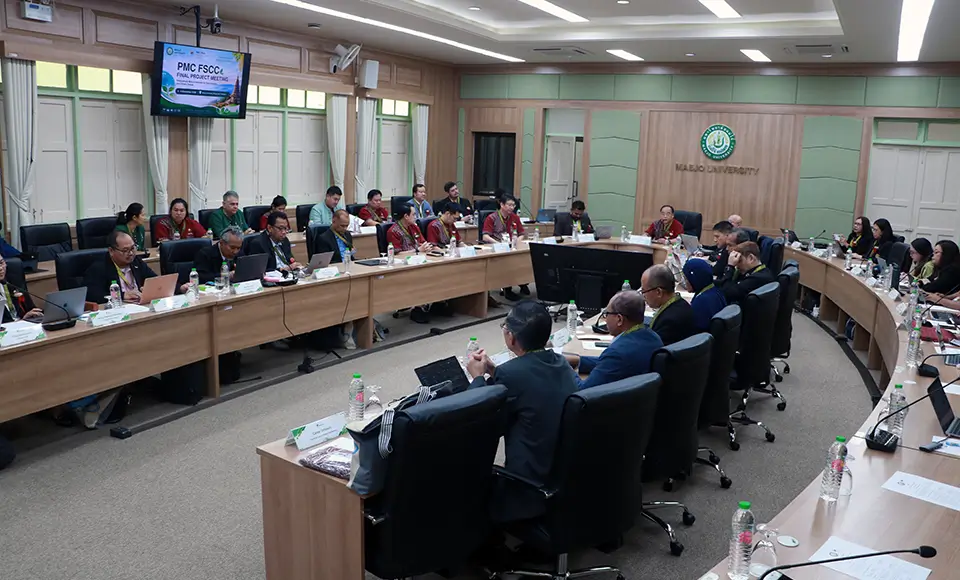
CHIANG MAI, Thailand—The Erasmus+-funded Postgraduate Micro-credentials for Food Security and Climate Change (PMC FSCC) project held its final meeting at Maejo University (MJU) on 4–5 November 2026 in Chiang Mai, Thailand to review accomplishments and plan for the continued delivery of its micro-credentials after the project's conclusion on 30 November 2026.
Led by Kasetsart University (KU), the project brought together universities in Southeast Asia and Europe, along with the Southeast Asian Regional Center for Graduate Study and Research in Agriculture (SEARCA), to develop flexible postgraduate learning opportunities addressing food security and climate change.
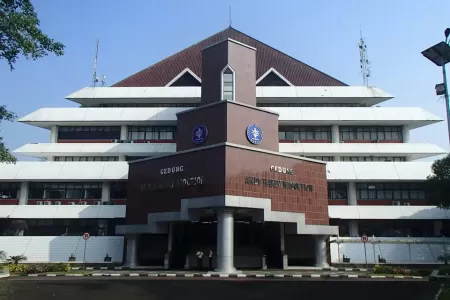
Representatives from IPB University, Universitas Gadjah Mada (UGM), and Universitas Brawijaya (UB) in Indonesia; Universiti Putra Malaysia (UPM) and Universiti Malaysia Sabah (UMS) in Malaysia; Kasetsart University (KU) and Maejo University (MJU) in Thailand; and the University of the Philippines Los Baños (UPLB), Central Luzon State University (CLSU), and Visayas State University (VSU) in the Philippines shared implementation experiences and plans for future program delivery.
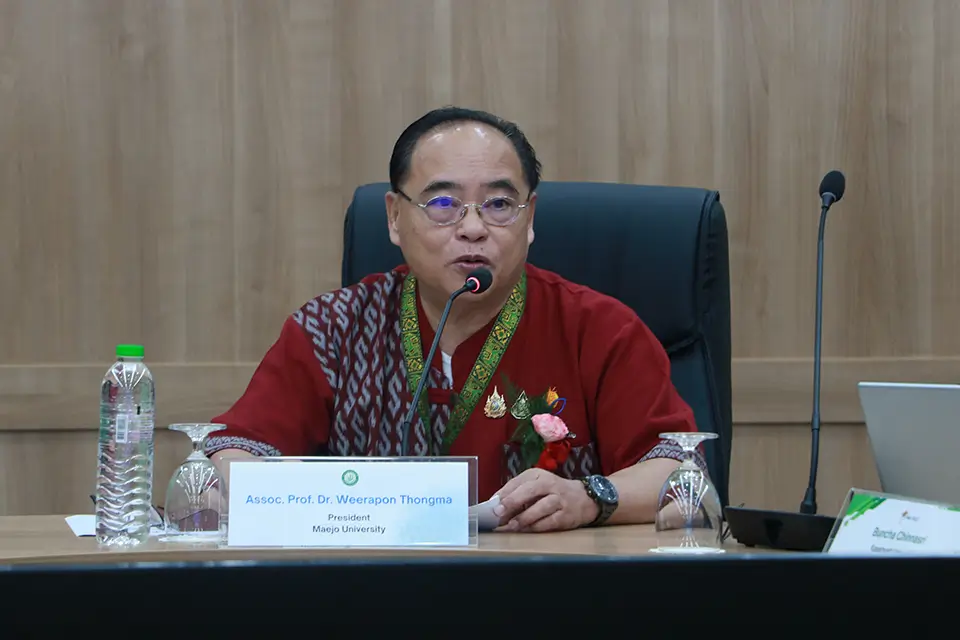
In his welcome remarks, Dr. Weerapon Thongma, MJU President, emphasized the importance of translating knowledge into practical responses to food security and climate change challenges. He also encouraged partners to strengthen collaboration in education, research, academic exchange, and capacity building beyond the project.
Reports from partner universities and project work packages covered module development and training, policy harmonization, quality assurance, evaluation, and dissemination. The project developed five micro-credential modules on food security and nutrition, carbon neutrality, risk assessment, spatio-temporal analytics, and environmental leadership and communication. Two pilot test runs were conducted to refine the modules before the program's first official offering. Two international conferences also provided platforms for sharing approaches to major agricultural challenges through flexible learning.
Discussions also highlighted the importance of learner engagement, facilitator preparation, and regular updates to learning materials. Participants also emphasized expanding reach to professionals and industry learners and assessing learning benefits beyond program completion rates.
The partners agreed to establish a steering committee comprising representatives endorsed by their institutions. SEARCA, as secretariat of the Southeast Asian University Consortium for Graduate Education in Agriculture and Natural Resources (UC), will coordinate the committee, which will support continued coordination delivery of micro-credentials as partner universities develop their own implementation arrangements for offering the micro-credentials beyond the project duration.