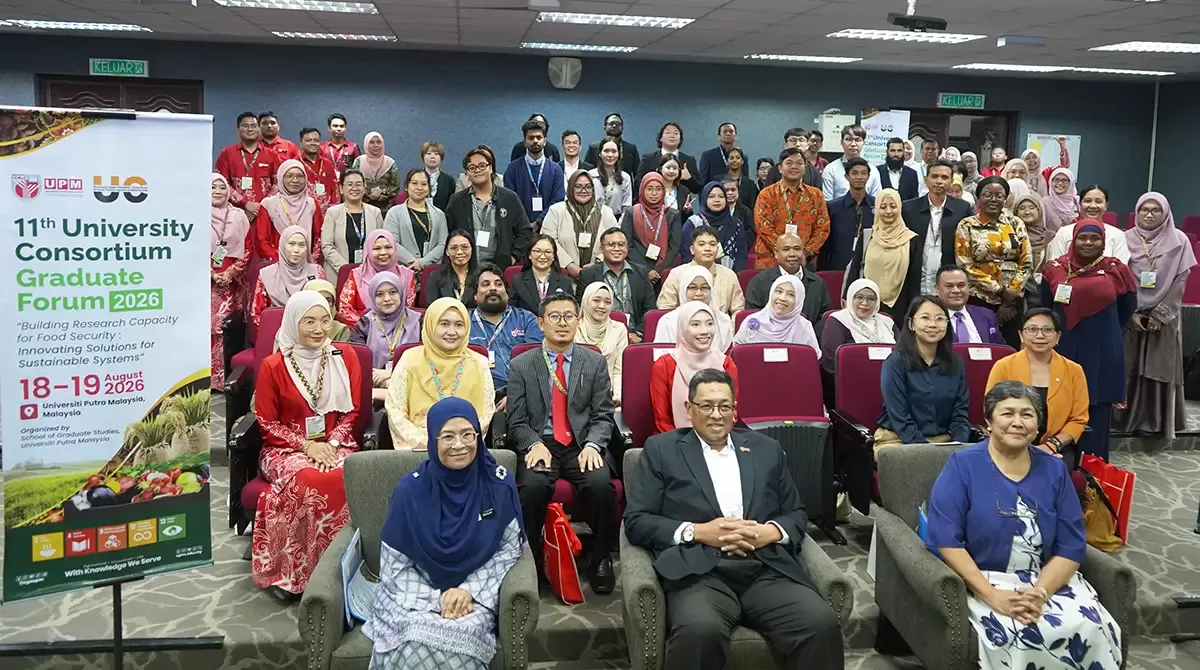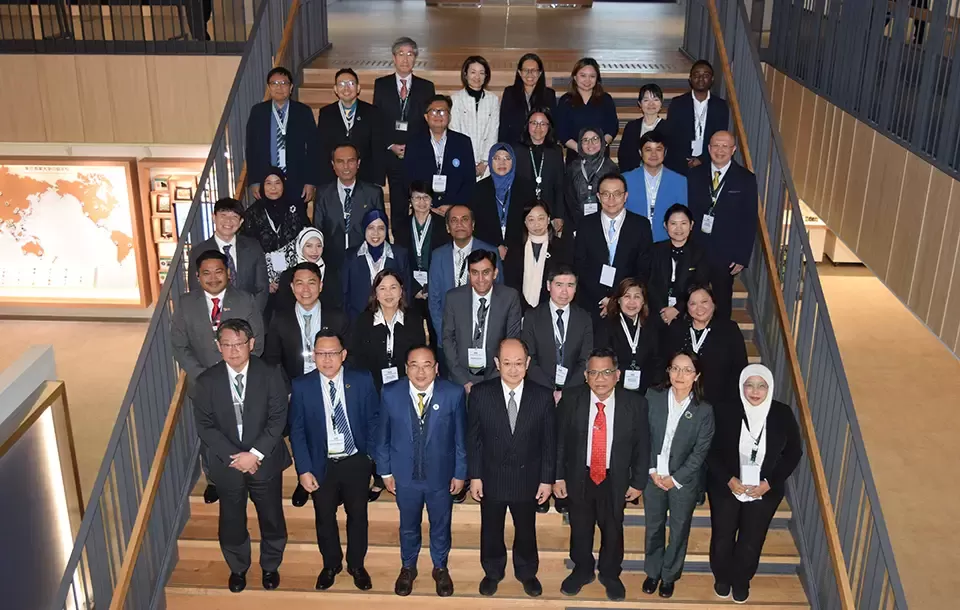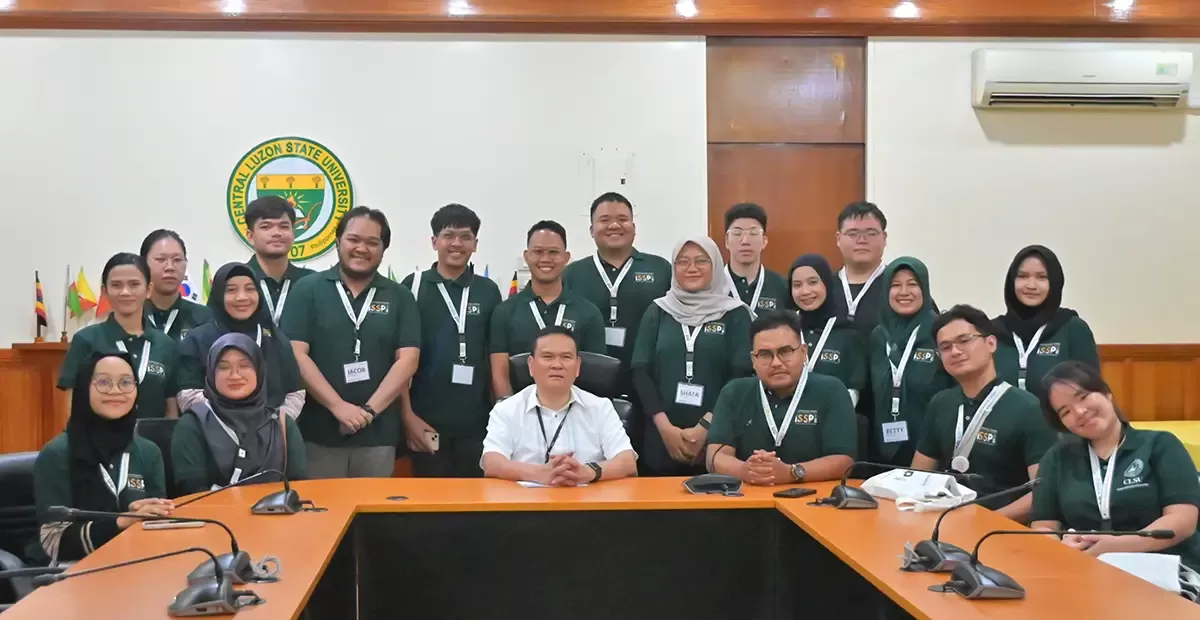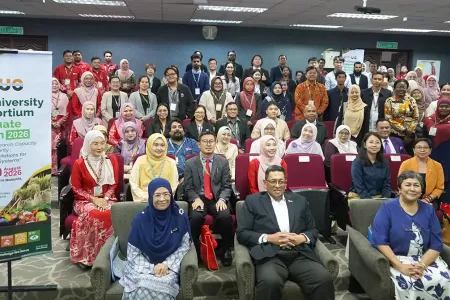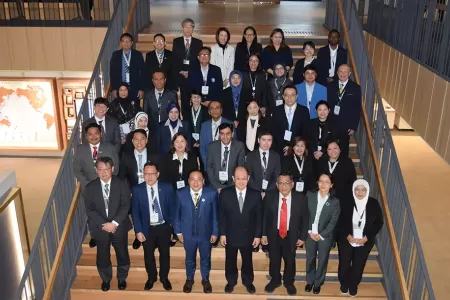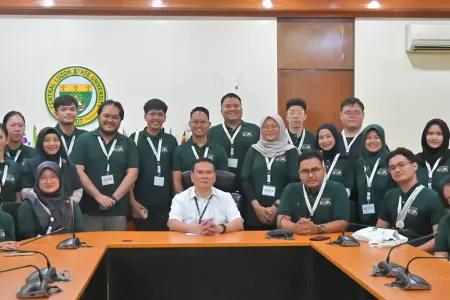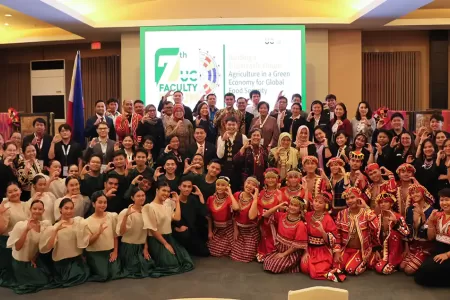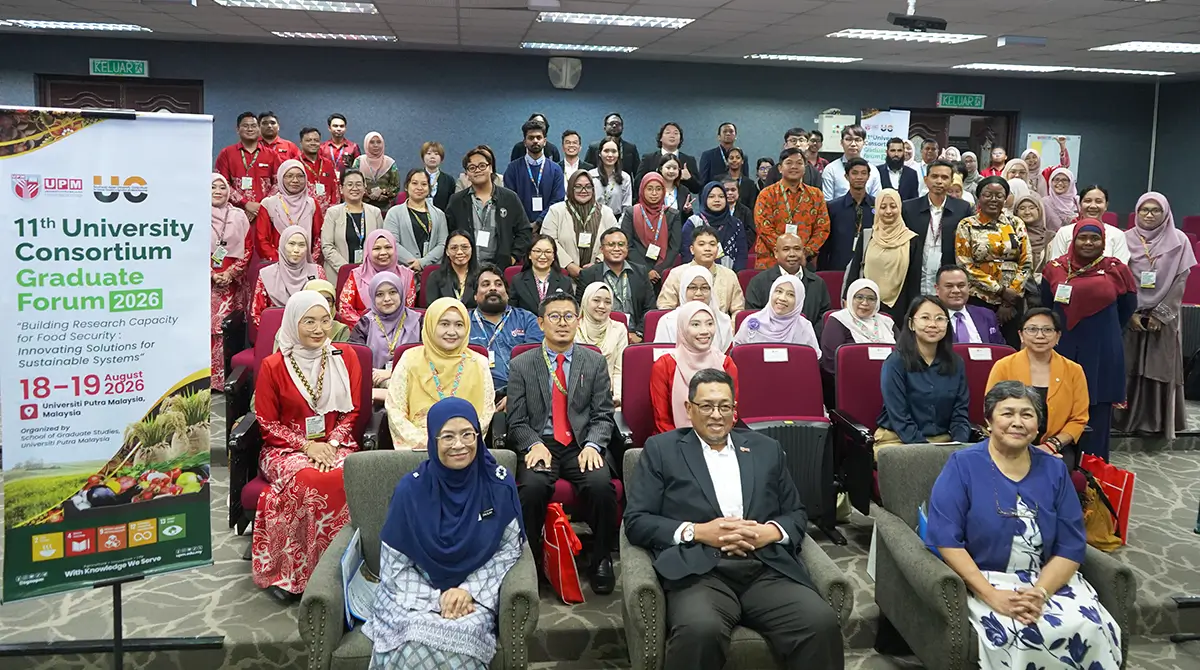
SELANGOR, Malaysia—The 11th University Consortium Graduate Forum brought together more than 50 officials and graduate students of the Southeast Asian University Consortium for Graduate Education in Agriculture and Natural Resources (UC) and guests at Universiti Putra Malaysia (UPM) on 18-19 August 2026. The Southeast Asian Regional Center for Graduate Study and Research in Agriculture (SEARCA) serves as the Secretariat of the UC, which provides a regional platform for collaboration among leading universities in agriculture and related fields.
Themed "Building Research Capacity for Food Security: Innovating Solutions for Sustainable Systems," the two-day forum focused on strengthening research capacity and fostering collaboration among emerging researchers working on food security and sustainable agricultural systems.
Organized by the UPM School of Graduate Studies (SGS), the forum brought together 36 master's and PhD students from 13 UC member universities, creating opportunities for knowledge exchange, collaboration, and academic networking among emerging researchers across the region.
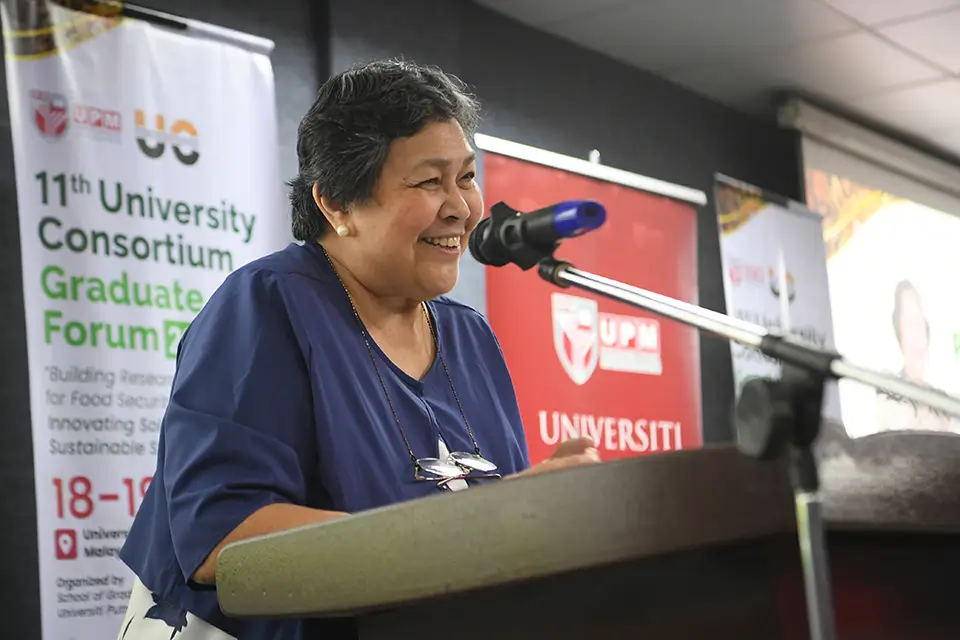
The forum opened with remarks by SEARCA Center Director Dr. Mercedita Sombilla, who urged young researchers to look beyond publication, persevere through setbacks, collaborate across disciplines and countries, and leverage emerging technologies to create meaningful solutions that strengthen food security and agricultural sustainability.
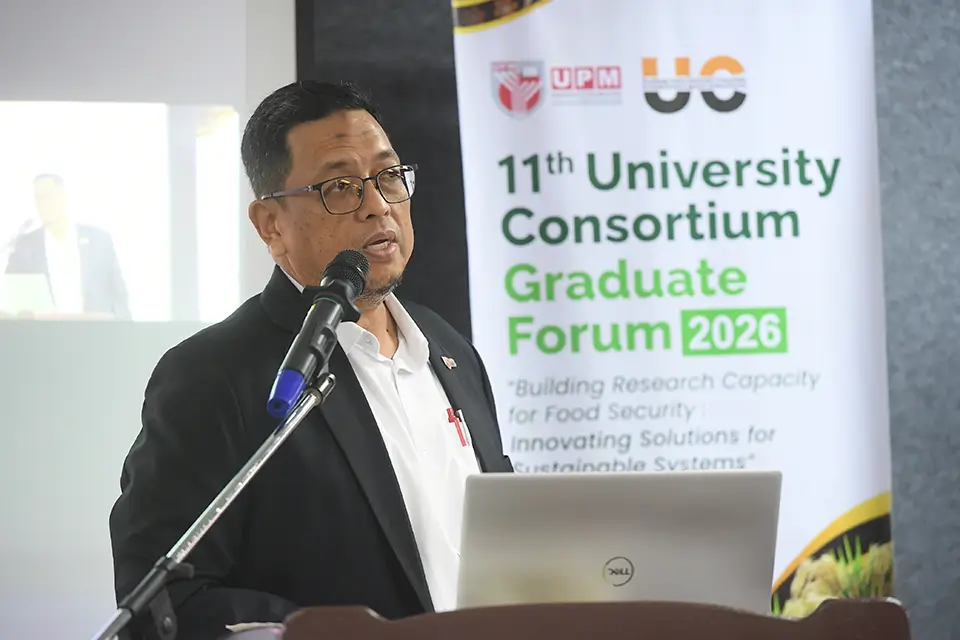
UPM Vice Chancellor YBhg. Dató Prof. Dr. Ahmad Farhan Mohd Sadullah delivered the keynote address on "Giving Impact to Agriculture and Food Security: Transitive Journey from Postgraduates to Subject Matter Expert." He challenged postgraduate students to see their research as part of a larger mission to address global food security challenges. He emphasized the importance of producing relevant and impactful research that delivers real-world solutions while encouraging students to become future subject matter experts and leaders in their fields.
"Your postgraduate degree is a vector. It's not a static journey. We hope that it does not end with your degree. It is actually the beginning of a greater journey," he said, underscoring the role of young researchers in driving innovation and sustainable development.
A major highlight of the event was 36 research presentations delivered in parallel sessions covering six key areas related to food security. These were sessions on Innovating Research for Sustainable Food Security; Policy and Governance in Food Security Research; Leveraging Technology in Food Security Research; Interdisciplinary Approaches to Food Security; Bridging Research and Community Action for Food Security, and Nutrition, Food Safety, and Public Health for Future Food Security.
Throughout the sessions, graduate students presented research addressing contemporary issues in agriculture, food systems, technological innovation, public health, and community resilience. The presentations provided a valuable platform for participants to exchange ideas, receive feedback from experts, and explore opportunities for future collaboration across institutions and disciplines.
The forum also featured plenary messages by distinguished UPM faculty members, who shared insights on emerging trends and research priorities in food security. These discussions reinforced the importance of interdisciplinary approaches and regional cooperation in addressing global food challenges.
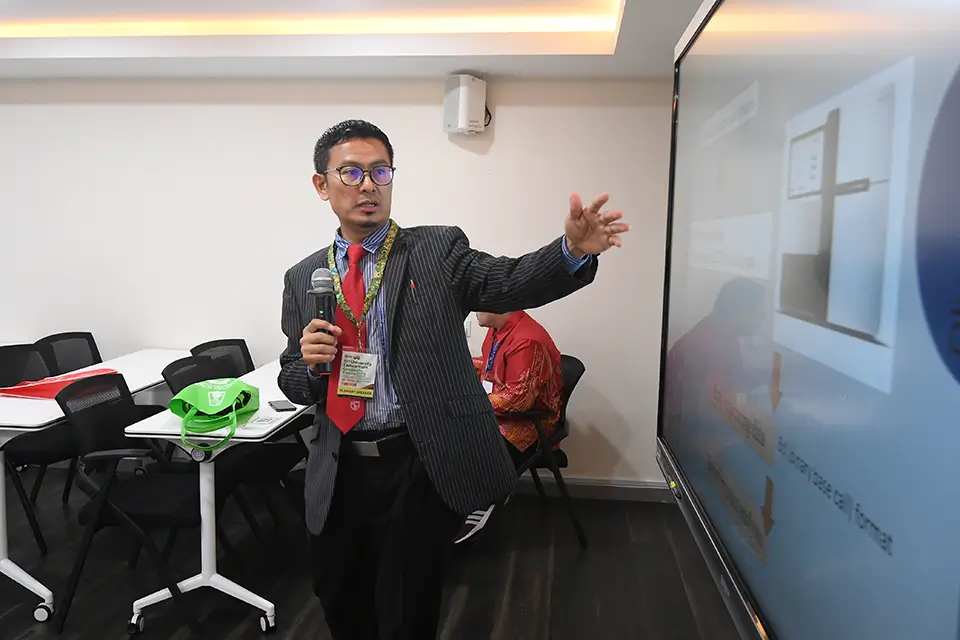
Among the plenary speakers is Assoc. Prof. Ahmad Faizal Abdull Razis, SEARCA Regional Professorial Chair Awardee AY2026-2027. In his lecture, Assoc. Prof. Ahmad Faizal highlighted the role of genomic technologies in authenticating village chicken breeds using breed-specific biomarkers, an approach that could contribute to sustainable poultry production and genetic resource management.
During the closing ceremony, the following outstanding presenters were recognized with Best Oral Presenter Awards, celebrating excellence in graduate research and scientific communication:
- Mr. Julius Pablico, Mariano Marcos State University (MMSU), "Effects of Brown Seaweed (Ascophyllum nodosum) Meal on Blood Glucose, Growth, Meat Quality, and Intestinal Health of Ross 308 Broiler Chicken" (Subtheme 1)
- Mr. Enrico Bargamento, Visayas State university (VSU), "Negotiating Modernization: Tenant Lived Experiences with Rice Farming Technologies in Rural Philippines" (Subtheme 2)
- Mr. Thabed Tholib Baladraf, IPB University, "Leveraging Predictive-Prescriptive Technology for Sugarcane Supply Chain Optimization: A Machine Learning and Meta-Heuristic Approach Toward Sustainable Food Security" (Subtheme 3)
- Ms. Precious Joan P. Sibulburo, Central Luzon State University (CLSU), "Community-Based Solar-Powered Tower Gardening as a Pathway for Bridging Research and Action Toward Food Security" (Subtheme 5)
- Ms. Siti Nabilah Karim, UPM, "Comparative Evaluation of Traditional Beef Rendang Under Different Cooking Durations and Coconut Milk Formulations Using Food Metabolomics and Zebrafish Embryo (Danio rerio) Models" (Subtheme 6)
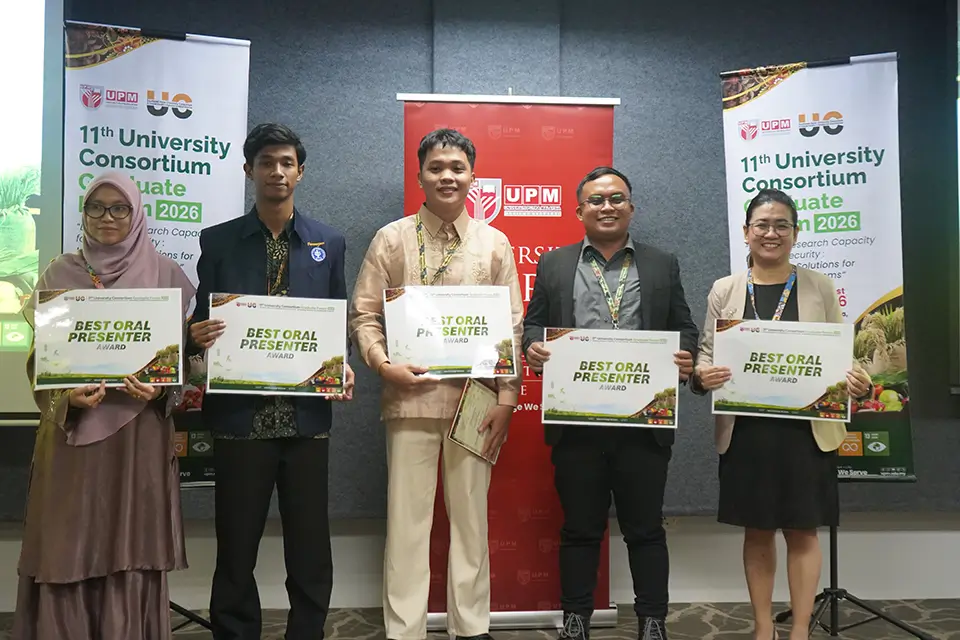
The awards underscored the quality of research being conducted by young researchers and reaffirmed the forum's commitment to academic excellence.
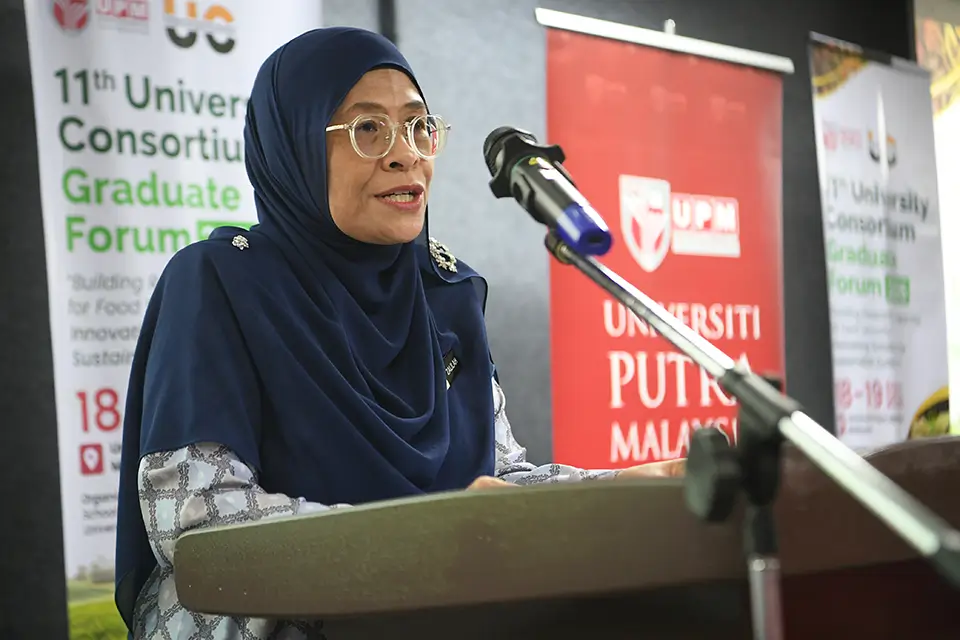
In her message to the participants, UPM School of Graduate Studies Dean Prof. Dr. Zalilah Mohd Shariff expressed hope that the forum would lead to continued academic exchange, meaningful partnerships, and innovative research initiatives that contribute to regional food security and sustainable food systems.
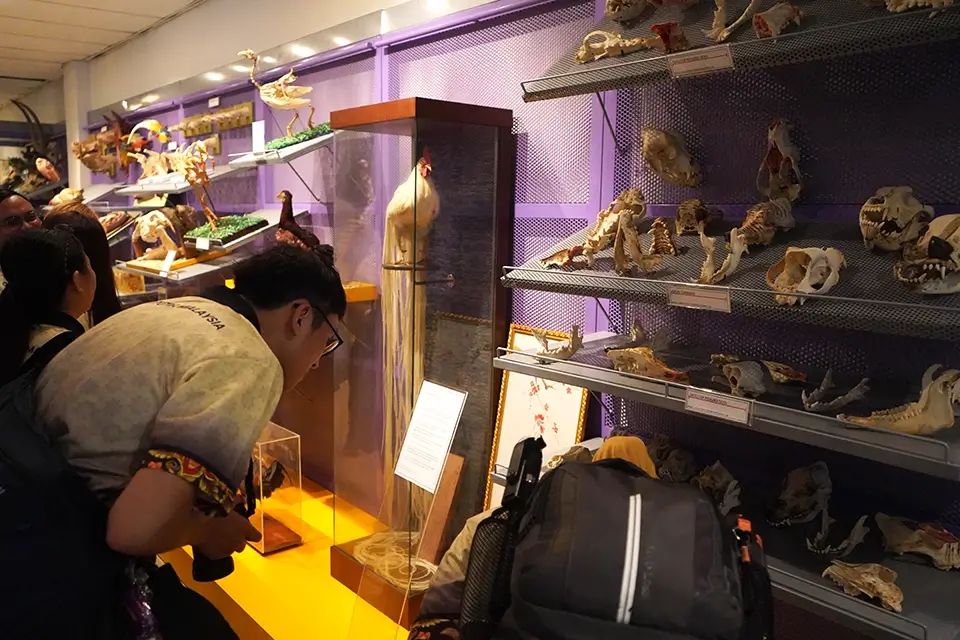
On the second day, participants joined an academic field trip and campus tour that included visits to Farm Fresh and UPM's Animal Anatomy Museum. The educational tour provided valuable opportunities for experiential learning, networking, and cultural exchange among graduate students.
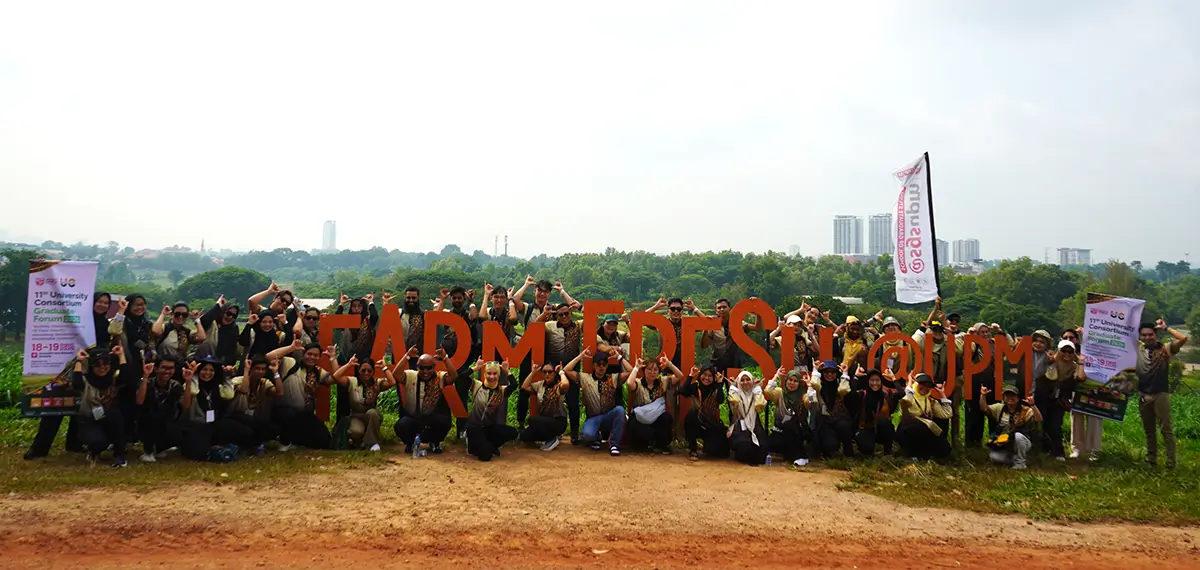
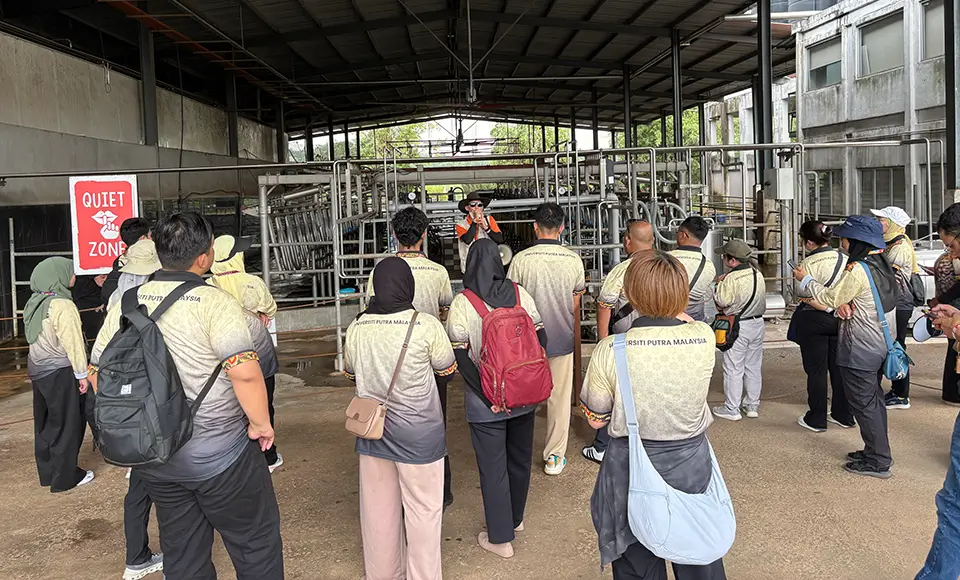
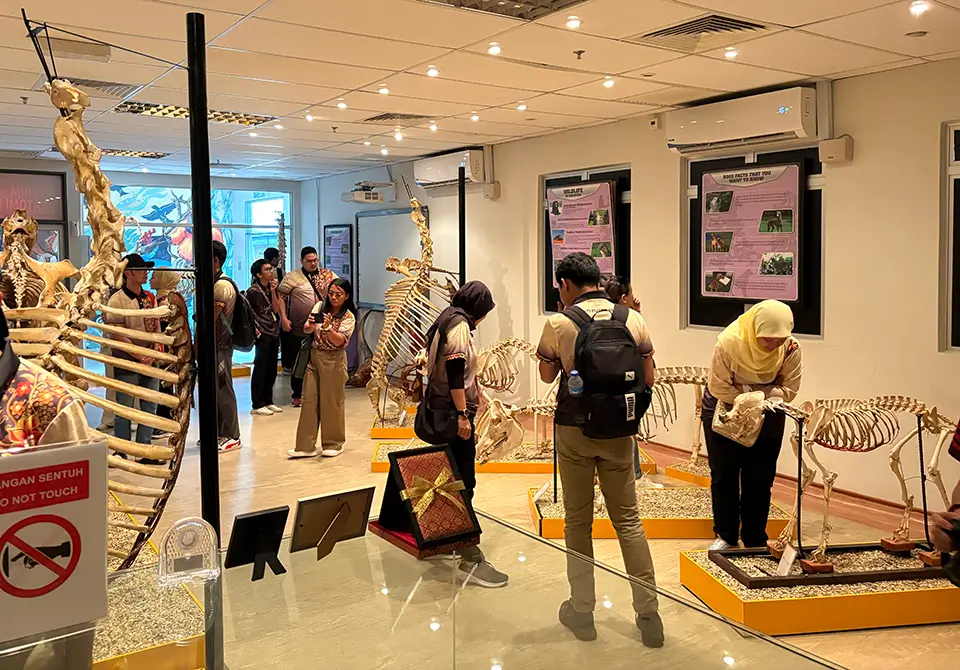
The UC Graduate Forum is an annual event that provides graduate students from UC member universities with a platform to exchange knowledge, research findings, innovative ideas, and academic experiences in an open and collaborative environment. It promotes transdisciplinary research, strengthens institutional partnerships, and fosters greater integration of research efforts among UC members.
As UC Secretariat, SEARCA supports the consortium's continuing efforts to strengthen graduate education, research collaboration, and academic mobility among its member institutions.
(All photos included in this article are courtesy of Universiti Putra Malaysia (UPM).)